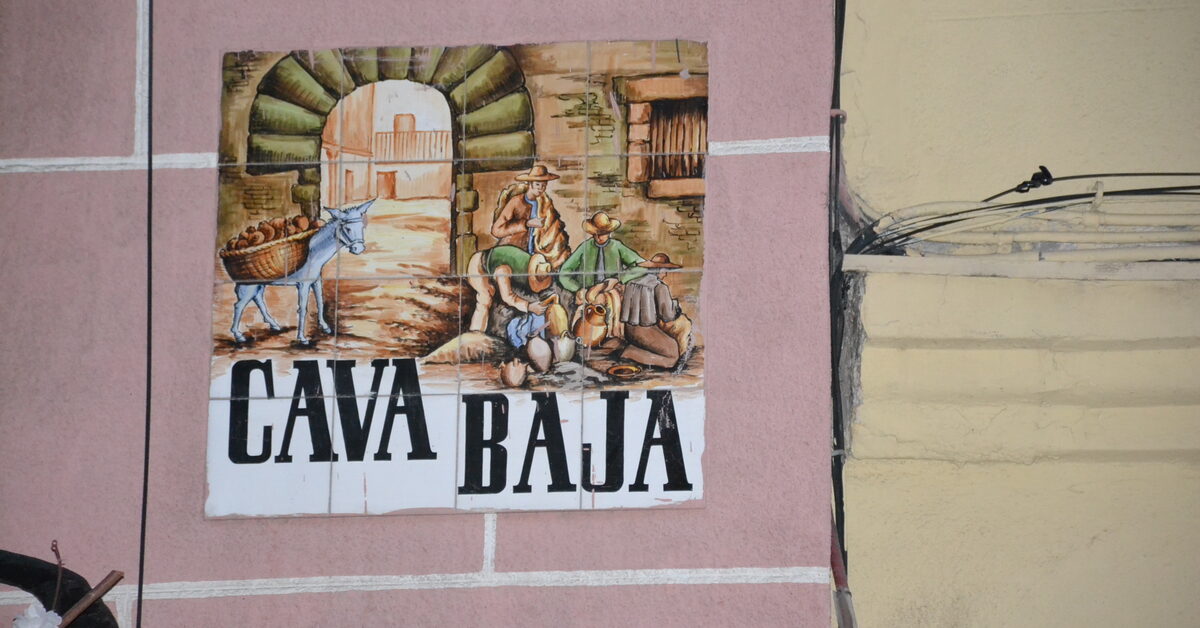
Few streets hold so much history in so few metres as Cava Baja. A cobbled slope right in the heart of the La Latina neighbourhood that, without it being immediately obvious, runs over what was once Madrid's defence: this is where the wall that enclosed the medieval town once stood. For us this is not tourist-guide theory. At number 8 on this street we light the holm-oak charcoal in our tavern every morning, and working here demands knowing the ground beneath your feet. Walking down Cava Baja is walking through time. Every doorway, every century-old tavern, every corner tells a story of an old Madrid that still breathes. That is why it is a must-stop for anyone who truly wants to understand what castizo means — a word so overused that here, by contrast, it means something very specific.
What is the origin of Cava Baja and its relationship with Madrid's defensive wall?
It all starts with the Christian wall, the one that protected the town in the heart of the Middle Ages. It was the second ring of Madrid, raised between the 12th century and the early 13th century to extend the city's perimeter beyond the first wall, the Arab one. The reason? Madrid was growing and running out of space. The new ring embraced areas like today's La Latina and joined checkpoints such as the Puerta Cerrada — those gateways where people monitored who was coming and going and what they were carrying. The history of the city is bound up with these walls, which for centuries dictated where it could grow. And Cava Baja is the physical proof of that evolution: a piece of military engineering that ended up becoming a street full of life. From moat to kitchen fire — to sum it up in four words.
What role did the wall play in the medieval defensive system?
The wall did several things at once, all of them important. It protected the residents from attack, of course. But it also marked the limits of the town, decided where trade could enter, and made clear how far Madrid's jurisdiction extended. It was built of stone, reinforced with towers, and stretched for several kilometres. At its foot, a moat made things even harder for anyone thinking of storming it. The few remains still scattered around the city are a reminder of how much these defences weighed when security depended, literally, on the thickness of a wall. The gateways, under guard, filtered the passage of goods and people. And those bottlenecks became, almost by accident, points of commerce and bustle. Where there is control of passage, there is business.
How did the cavas form around the Christian wall?
The cavas were born from digging. That sounds obvious, but there lies the key. To reinforce the wall a moat was excavated around it, and all the earth that came out of that trench had to go somewhere. It was piled up alongside the wall, and those earthworks eventually gave their name to the cavas. At first they were part of the military apparatus, an outer strip separating the fortification from the countryside. Afterwards, when the walls lost their wartime purpose, houses and businesses arrived, and those strips were urbanised without giving up the name. That is what is curious about the whole affair: a wartime necessity ended up drawing the city's layout. The Cava Baja de San Francisco is precisely that — a trace of the moat that medieval town-planning left permanently marked on the street map.
Why is it called Cava Baja, and how does it differ from Cava Alta?
The name is about height. Cava Baja is named so because it sits lower than Cava Alta, both following the outline of the old wall at different elevations. It is not a whim: it reflects the real difference in terrain on which medieval Madrid was built. The Baja sits at the lower part, closer to Calle Toledo and facing south towards the town. The Alta runs higher up. That difference in level gave them complementary roles in the city's fabric, connecting neighbourhoods and distributing traffic along the wall. Over the centuries, each developed its own personality, though they share that underlying traditional character. And if you look at how Cava Baja meanders, at its winding path, you are seeing the course of the old moat. The street adapted to it, and has never quite let it go.
How many centuries of history has Cava Baja accumulated in the La Latina neighbourhood?
Give it about eight centuries. From when it formed as part of that medieval defence to today, when it is one of the most vibrant arteries in La Latina, Cava Baja has been documented since the 12th century, when the Christian wall opened up the spaces that would later become the street. In that time it has seen everything: the Madrid of the Habsburgs, its transformation into a gastronomic mecca, fashions that came and went without touching its soul. All that accumulated life makes it a kind of open-air museum, except here the paintings are taverns and the labels are façades. That businesses with a hundred or four hundred years behind them are still open says a great deal. It speaks of a street that has known how to change just enough to survive without ceasing to be itself.
What remains of the medieval wall survive in the area?
There are fewer than one would like, but there are some. Most of the Christian wall was demolished over the centuries to allow the city to grow. Even so, some stretches survived embedded inside newer buildings, or came to light during excavations. Around La Latina and the surroundings of Cava Baja there are sections of the old wall that show how it was built and how imposing these defences once were. Their value is precisely that — to touch medieval Madrid with your own hands, to imagine the walled city inhabited by those who came before us. Some premises on the street have traces of the wall in their foundations or cellar, fusing eras in a single corner. In other words: whoever dines today in Cava Baja may be doing so above the rampart that defended Madrid eight hundred years ago.
How did the cavas evolve from the Middle Ages to today?
The journey from moat to wine street was long and says a great deal about how Madrid's priorities changed. When the wall defended nothing and the moat became superfluous, the open spaces filled with people and trades. And Cava Baja's position worked in its favour: it connected neighbourhoods and sat close to transit routes like Calle Toledo, making it the ideal spot to open an inn or eating house to serve residents and travellers. That vocation was reinforced over the centuries, adding businesses that, from parents to children, kept Madrileño cooking alive. The street filled with taverns, inns and rice houses specialising in the classics — from cocido stew downwards — until it became a mandatory stop for anyone with a taste for the traditional. And the legacy keeps being written. Kitchens like ours, focused on the holm-oak charcoal grill, add new chapters to a history that proves a military space can end up devoted, completely, to the pleasure of eating.
When did inns and taverns start to establish themselves on the street?
The bulk arrived in the 16th and 17th centuries, in the heart of Habsburg Madrid, when the city exploded after becoming the capital of the empire. Space was needed for all the travellers, merchants and officials appearing in the town, and the inn was the answer: bed and board under one roof. Cava Baja, halfway between the centre and areas like San Francisco el Grande, was perfectly suited to those businesses, which needed to be visible and accessible. The Posada del León de Oro, one of the most celebrated, embodies that hospitality tradition stretching back several centuries, when providing a bed was a key part of the city's economy. Those inns did not only offer lodging. They were meeting points, where the traveller dropped off and collected news, turning them into hotbeds of Madrid social life. From there to gastronomic specialisation was only a small step, and the street took it. Those first inns are the direct origin of today's bars.
What role did taverns play in Madrid's social life?
The tavern was far more than a place to drink. In old Madrid it functioned as a public square under a roof, a place where people of every condition met to chat, find out what was happening and keep the customs of the town alive. The traditional character of these bars came from precisely that — the familiar atmosphere, the direct personal rapport, a Madrileño cooking without pretensions. Over the years, the taverns of Cava Baja became guardians of inherited recipes, techniques passed from parents to children and social rituals that shaped the city's identity. They were also a cultural loudspeaker: here people sang, told stories and debated the news of the day, and from all that contact grew a sense of neighbourhood, of belonging. That ritual of the shared table is not dead. It lives on every time a group orders our tapas and sharing plates, because a tavern, today just as three centuries ago, is measured by the conversations it fits inside. That so many have reached us as centenaries shows how much Madrid values these places.
How did it become a benchmark for traditional Madrileño gastronomy?
It did not happen overnight. Cava Baja became a reference for the castizo tradition through the concentrated presence, side by side, of establishments devoted to preserving genuinely Madrileño cooking. That concentration did not fall from the sky: it came from the street's hospitality tradition and from a clientele that kept returning in search of authentic flavours and old-fashioned atmospheres. Dishes such as cocido, callos (tripe stew) and gallinejas found in these taverns the perfect setting to be refined and cherished. Other Spanish cuisines were gradually added alongside them on the same street. Ours is one of them: rice and paellas cooked over holm-oak charcoal, a way of working with fire that connects with what has always been done here; we explain it in our guide to where to eat paella near you in Madrid. Good produce, loyalty to the recipe and a genuinely Madrileño atmosphere attracted locals and visitors alike. And so, almost without trying, strolling along Cava Baja became synonymous with eating well. A reputation that holds from one generation to the next and which, year after year, keeps filling the street.
Which historic establishments with centuries of history remain on Cava Baja?
The street holds a collection of premises that have withstood the test of time without giving in. They are not mere businesses: they function as institutions, custodians of the memory of La Latina and of social and culinary customs that are pure Madrid. Among taverns, inns and old posadas, Cava Baja brings together a body of establishments whose value is hard to calculate, where old architecture and inherited recipes go hand in hand. If you fancy a venue-by-venue tour, we have put one together: our guide to restaurants on Cava Baja in Madrid, told from inside the street itself. That so many are still open after centuries proves two things. That they have known how to move with the times, and that Madrileños cherish these corners as part of their own. To step inside any of them is to peer into how life was lived in old Madrid, to taste stews that have been made the same way for generations and to breathe in that traditional air at the bars that have always been there.
Which century-old taverns and inns are still operating today?
Standing out above all others is the Posada de la Villa, a tavern with more than four hundred years behind it that has preserved its essence while keeping up with the times. It retains features of its original architecture, the kind that transport you straight to Habsburg Madrid, while pairing that authenticity with high-quality cooking. There are more: taverns that have been open for over a hundred years without interruption, keeping old Madrileño recipes alive and an atmosphere of old Madrid intact. They are not just places to eat. They are living museums, where every corner says something, where original architectural details are visible, period furniture and photographs document how the street and its people have changed. That these taverns still stand after so much time is something exceptional in a city that is always in a hurry, and proves that secular traditions can be maintained without breaking. Many remain in the hands of families who have spent generations tending the legacy they received, turning the work of every day into a quiet form of preserving heritage. Sharing the pavement with neighbours like that is a daily lesson in craft — and a responsibility for those of us who have come after.
What is the history of the Posada del León de Oro?
The Posada del León de Oro is one of the most emblematic establishments on the whole street, with roots in the 17th century, when it gave beds to travellers arriving in the town. The name comes from the golden lion that identified the premises, a symbol that has survived centuries as the house trademark. For generations, the León de Oro welcomed merchants, pilgrims and passers-through who were looking for a roof, a meal and a rest at a stopping point on their journey. It had the typical layout of these places in medieval and Renaissance Madrid: inner courtyards where pack animals were left, rooms on the upper floors and common areas where guests shared food and conversation. In its long life it has seen everything, from political upheavals to social changes that shook all of Madrid. The building has been reformed, of course, in order to remain useful, but it has preserved original elements that allow one to imagine what those lodging houses were like. That it is still there, after so many centuries, says clearly how much the hospitality tradition has weighed in the character of La Latina.
Which buildings preserve elements of the old wall and the cavas?
Several buildings on Cava Baja hold, within their very structure, evidence of the Christian wall and the system that gave origin to the cavas. Some have fragments of the medieval wall in their foundations or cellar — stone walls that show through among later construction and reveal the techniques of that time and the scale of those defences. This is not just archaeology: it is the physical connection between the present and the Madrid of war, a way of visualising how the city was protected. Some businesses and homes whose owners have preserved those remains show them to the public as a distinctive feature that adds value to the property. The very shape of the street, with its slopes and winding path, also betrays the adaptation to the course of the old moat. To that can be added buildings with features of medieval and Renaissance Madrid: brick façades, stone-arched doorways, interior layouts faithful to old patterns. Taken together, this makes Cava Baja an open-air museum, where stone tells the story of Madrid's evolution from the Middle Ages to the present day.
Why is Cava Baja considered the most representative street of the La Latina neighbourhood?
If one street sums up La Latina, this is it. Cava Baja condenses like no other the history, culture and cooking that give the district its identity. And this is not a title given as a gift: it is the fruit of centuries of maintaining the traditional character, the same old atmosphere and its role as the social heart of the neighbourhood. Everything that defines La Latina converges here: the past linked to the wall, traditional architecture, century-old premises devoted to Madrileño cooking and a popular atmosphere that smells of old Madrid. While other parts of the city were transformed from top to bottom, Cava Baja managed to preserve its face and its vocation, resisting the pressure from property developers that could have changed it for ever. That continuity makes it a symbol, and not only for those who live in the neighbourhood: for any Madrileño who values what is inherited. Walking down it is stepping into Madrid's living history, experiencing the traditions of generations and enjoying an atmosphere that keeps the traditional spirit alive.
What architectural features does it preserve from its past alongside the wall?
The first thing that reveals its origin is the shape. The winding, sloping path of Cava Baja traces the course of the old moat and the contour of the wall, adapting to the terrain on which medieval Madrid was built. Compared with the more grid-like town-planning of later zones, that irregularity gives it a distinctive character which, from the very moment you enter, speaks of its past. The differences in level and changes of gradient along the street also tell the story of that defensive system, where moat and cavas bent to the contours of the land to defend more effectively. Many buildings raise bearing walls of traditional masonry, with techniques inherited from medieval and Renaissance architecture. Some façades preserve original features: wrought-iron balconies, stone-vaulted doorways, interior layouts very much of classic Madrid. And scale matters, because the moderate height of the buildings respects the proportions of the historical townscape and avoids the tall blocks that would break the harmony. All of this together forms a coherent urban landscape that reads as what it is: history.
How does it maintain its traditional and Madrileño character?
The traditional character here rests on several pillars: premises that have never closed, respect for the cooking of always and a neighbourhood that knows what it has. Castizo — that very Madrileño word — points to the authentic, the genuine, what preserves its original form without imitation, and Cava Baja embodies it to the letter. Its bars and restaurants still serve Madrileño cooking through inherited recipes, keeping alive flavours and techniques that form part of the city's heritage. In that same spirit we understand our menu, where aged meats, fresh fish and rice dishes pass over the charcoal without artifice — the oldest and most honest way of cooking that we know. The atmosphere of the taverns, with their classic décor, their family-like treatment and a clientele that mixes local residents with visitors, reproduces the old Madrid where everyone fitted in and conversation was the rule. The neighbourhood's festivals reinforce that character: San Cayetano, San Lorenzo and the Virgen de la Paloma find in Cava Baja a stage where tradition is lived to the full. And the stubbornness of traders and residents against any change that threatened the essence of the street has counted for a great deal. That collective awareness — material and invisible at the same time — is what keeps Cava Baja as a stronghold of authentic Madrid in an ever more global city.
What is its relationship with other historic streets such as Cava Alta?
Cava Baja and Cava Alta are blood sisters: they were born at the same time, from the same defensive system of the Christian wall. They run in parallel following the old layout, only at different heights — hence their names. Both served to mark the city's perimeter, as strips of passage between the walled city and the area outside the walls. When the defences fell and the land was urbanised, both took the same path, that of lodging and catering, serving a population that never stopped growing. Their proximity is fortunate for the walker: you go down Cava Baja and connect with Cava Alta, noticing what they have in common and what sets them apart. And the family resemblances do not end there. Calle Toledo or the streets alongside San Francisco el Grande also have ties with the cavas, forming a network that tells the story of La Latina's evolution from the Middle Ages. That group of streets with history, with Cava Baja as its most visible face, is a first-rate piece of urban heritage that shows the different layers of the Madrid that has always been.
How are the cavas of Madrid related to the city's old defensive moat?
The relationship is one of cause and effect. The cavas exist because the moat around the Christian wall existed, no more and no less. That moat was a key element of the defence: it was designed to slow and obstruct any assault, forcing the attacker to descend and climb again under fire from those holding the walls and towers above. Digging it generated mountains of earth and rock that had to be dumped somewhere, and out of that came the raised strips and spaces that would later be called cavas. The example teaches something rather nice: a medieval military necessity left urban consequences that have lasted to this day, shaping Madrid's street map. Turning that moat into streets of houses and businesses took centuries, as the wall lost its purpose and the city overflowed beyond its limits. And that the name "cava" still survives in places like the Cava Baja de San Francisco keeps alive the memory of that origin — a reminder that the Madrid of today is built, literally, on top of the Madrid of before.
What exactly was the moat that surrounded the Christian wall?
It was a ditch — plain and simple. A deep and wide ditch, dug deliberately to reinforce the wall and make life enormously difficult for anyone wanting to storm the town. As in so many medieval fortifications across Europe, it placed an extra obstacle that attackers had to clear before reaching the wall, and while they were crossing it they were exposed to the defenders for long enough to repel them. One detail worth noting: the moat of medieval Madrid was not permanently filled with water, as was common elsewhere in Europe. It defended through its depth, which could reach several metres, and through the difficulty of crossing it quickly, especially while laden with weapons and assault equipment. Digging it was a major feat of engineering, requiring a great deal of labour and logistical effort to move all that earth and rock. Its dimensions varied according to the terrain and according to where the defences were more vulnerable, becoming deeper and wider at the critical points. The moat ran around the entire perimeter of the wall, interlocking with towers, fortified gateways and battlements in a complex defensive system. And out of that relationship between moat and wall came, in due course, the layout of the cavas — Cava Baja included — whose present-day course still more or less follows the contour of those old defences.
How were the defensive spaces transformed into residential streets?
It happened gradually, over centuries, at the pace at which security needs changed and the city overflowed its limits. The Christian wall steadily lost its military purpose for two reasons: the territory was pacified and warfare changed, rendering these fortifications obsolete. The moat, without maintenance, began to silt up on its own and was deliberately filled in, preparing the ground for building on top. The cavas, previously peripheral and low-status zones, became attractive for trade and housing as Madrid grew beyond its walls. Opening an inn, a tavern or a workshop here made clear economic sense: these gaps offered access, visibility and more affordable costs than inside the walled city. The strong push came with Habsburg Madrid, when the surge in population urgently demanded new spaces. The authorities gradually imposed order: they laid out streets, set building regulations and brought basic services to areas that had none. It did not happen the same way or at the same time for all the cavas, but varied according to the pressure of each moment and the opportunities on each site. Cava Baja is, of all of them, the most rounded case: from medieval defence to one of the most vibrant streets in La Latina.
What other cavas exist in Madrid, and what is their history?
Cava Baja is not alone. Madrid preserves other cavas that recall how far the defensive system of the Christian wall extended and how the city transformed over the centuries. The best known after the Baja is Cava Alta, which runs in parallel but higher up, with the same origin and a similar commercial vocation, though with its own character. The Cava de San Miguel, alongside the Plaza Mayor, is another stretch of this system of streets born from the moat, although its history was different because it was closer to the nerve centre of old Madrid. All of them together formed a ring of transitional spaces between the walled city and the outskirts that were springing up beyond. Each developed in its own way, according to where it was located, which trades settled there and what changes were carried out. Some have preserved their historic atmosphere better; others have changed so much that they are hard to recognise. The Cava Baja de San Francisco stands out for how well it has held on to its traditional character and for its unbroken run of old-style taverns. Whoever walks along it today, stopping at its classic bars or sitting down at our grill at number 8, is participating in that same history. Comparing one cava with another helps to understand how complex the medieval defensive system was and how different the paths each one has taken. That they still bear the same names as before keeps alive the memory of walled Madrid — a reminder that the city of today is built on layer upon layer of a past that is worth knowing, protecting and passing on to those who come after.