Looking for where to eat paella near you in Madrid? The place has a name and an address: Cavacarbon, Taberna Cava Carbón on Calle Cava Baja, 8, right in La Latina. What sets the rice here apart is no closely guarded secret — it's the holm-oak charcoal. That fire leaves in every grain a smoky depth and a perfect cooking point that separates a run-of-the-mill paella from one that stays in your memory. The rice menu doesn't beat around the bush: a traditional Valencian paella and a mixed paella with a touch of charcoal. Two, and done well.
Where to eat charcoal paella near you in Madrid?
Eating a good wood-fired rice in Madrid depends on two things that rarely go together: respect for the Valencian recipe and mastery of the fire. Cavacarbon brings both together on Cava Baja, one of the streets with the richest tavern history in La Latina. The kitchen cooks over holm-oak charcoal, and you can taste it from the very first bite: the subtle smoky aroma, the well-marked socarrat, the rice right where it should be. This is not just another restaurant on an endless list. It's a concrete answer for anyone who types "paella near me" on their phone and wants the result to mean something.
Cavacarbon at a glance
- Address: C. de la Cava Baja, 8 · 28005 Madrid (La Latina)
- Cuisine: charcoal-grill tavern, holm-oak charcoal
- Rice dishes: Valencian paella and mixed paella with a touch of charcoal
- Reservations: 647 79 83 00 or the website booking form
Cavacarbon, a charcoal-grill tavern on Cava Baja
Cavacarbon is a charcoal-grill tavern at Calle Cava Baja, 8, Centro district, postcode 28005. Its kitchen revolves around holm-oak charcoal, which the house uses for both its aged meats and its rice dishes. The paella holds pride of place here: a traditional recipe, but passed through the fire that gives the restaurant its name. The atmosphere — a genuine tavern without pretension — fits perfectly with the spirit of Cava Baja, where sitting down to share a table is half the occasion. To book, all it takes is a phone call: 647 79 83 00.
Holm-oak charcoal, its hallmark
Here, holm-oak charcoal calls the shots. Compared with other ways of cooking rice, the grill imparts a discreet aroma that embraces each grain without overpowering it. That smoky nuance, combined with careful fire management, is what allows the paella to develop the golden socarrat that true enthusiasts chase. In the tavern they modulate the intensity depending on the rice, because a Valencian doesn't ask for the same heat as a mixed. What comes out is a dish with real character, where each ingredient speaks for itself and, underneath, that caress of smoke that only holm oak can give.
La Latina, the neighbourhood of wood-fired rice
La Latina is one of Madrid's most flavourful corners, and Cava Baja, its most popular street, concentrates a large share of the best cooking in the city centre. Eating paella here means doing so in a lively setting, a short stroll from Plaza Mayor and the most traditional Madrid. Cavacarbon plays that card well: it offers charcoal-cooked rice to those wandering through the area, to local regulars, and to anyone specifically looking for a place to eat paella in the centre. Getting there is straightforward — on foot from Sol or by metro to La Latina or Tirso de Molina.
Where to eat a good Valencian paella in Madrid?
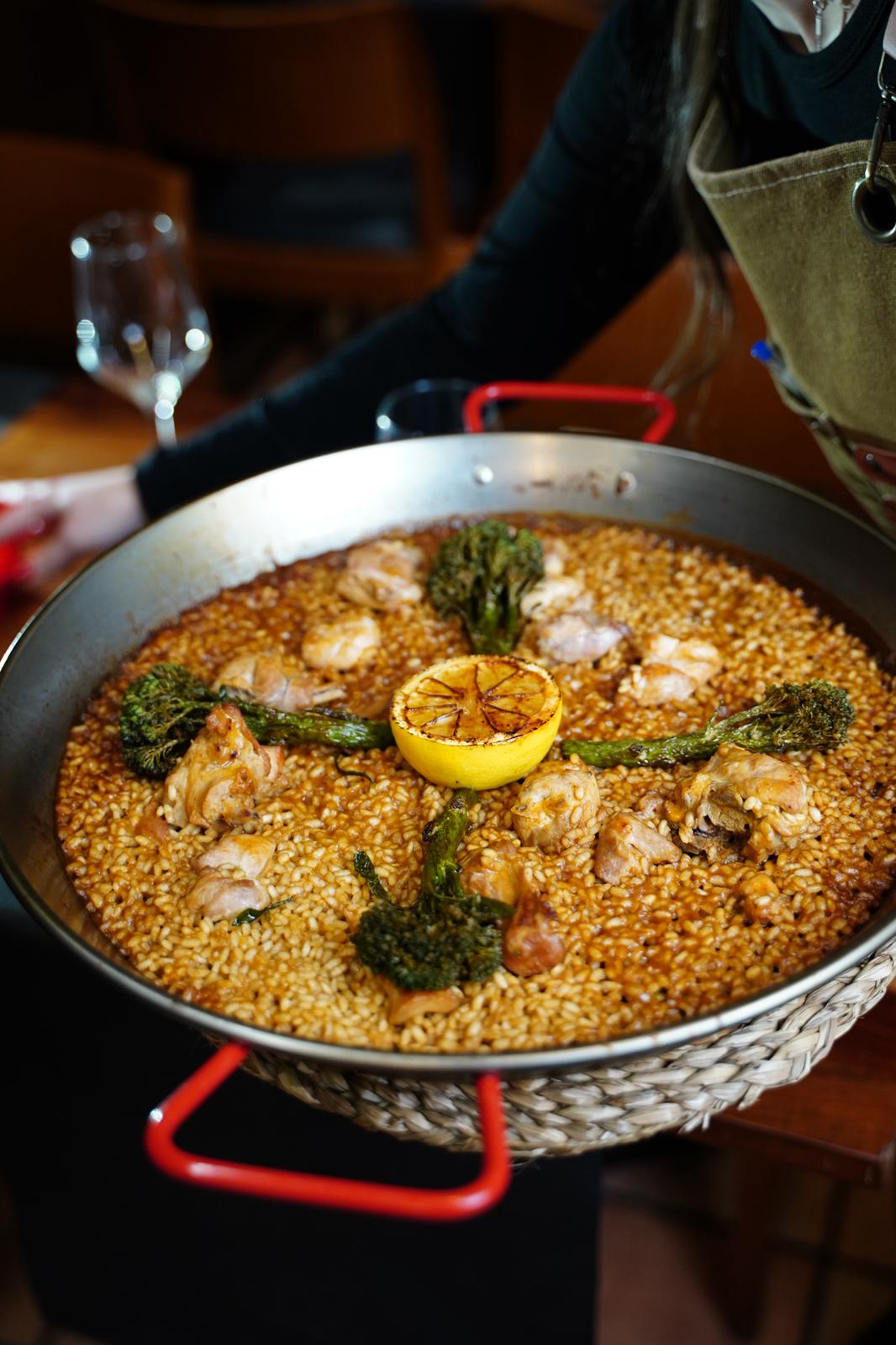
The Valencian paella is the classic rice dish par excellence, and at Cavacarbon it is prepared honouring the original recipe, with the difference that holm-oak charcoal brings. Whoever orders a Valencian is looking for authenticity: quality ingredients, rice cooked to perfection, and that socarrat that crowns the dish. The tavern commits to that purity, with no shortcuts or gimmicks, letting every element taste of what it is and letting the charcoal round out the rest. It is the choice for purists — those who understand paella as a dish of tradition that needs no disguise.
Cavacarbon's Valencian paella
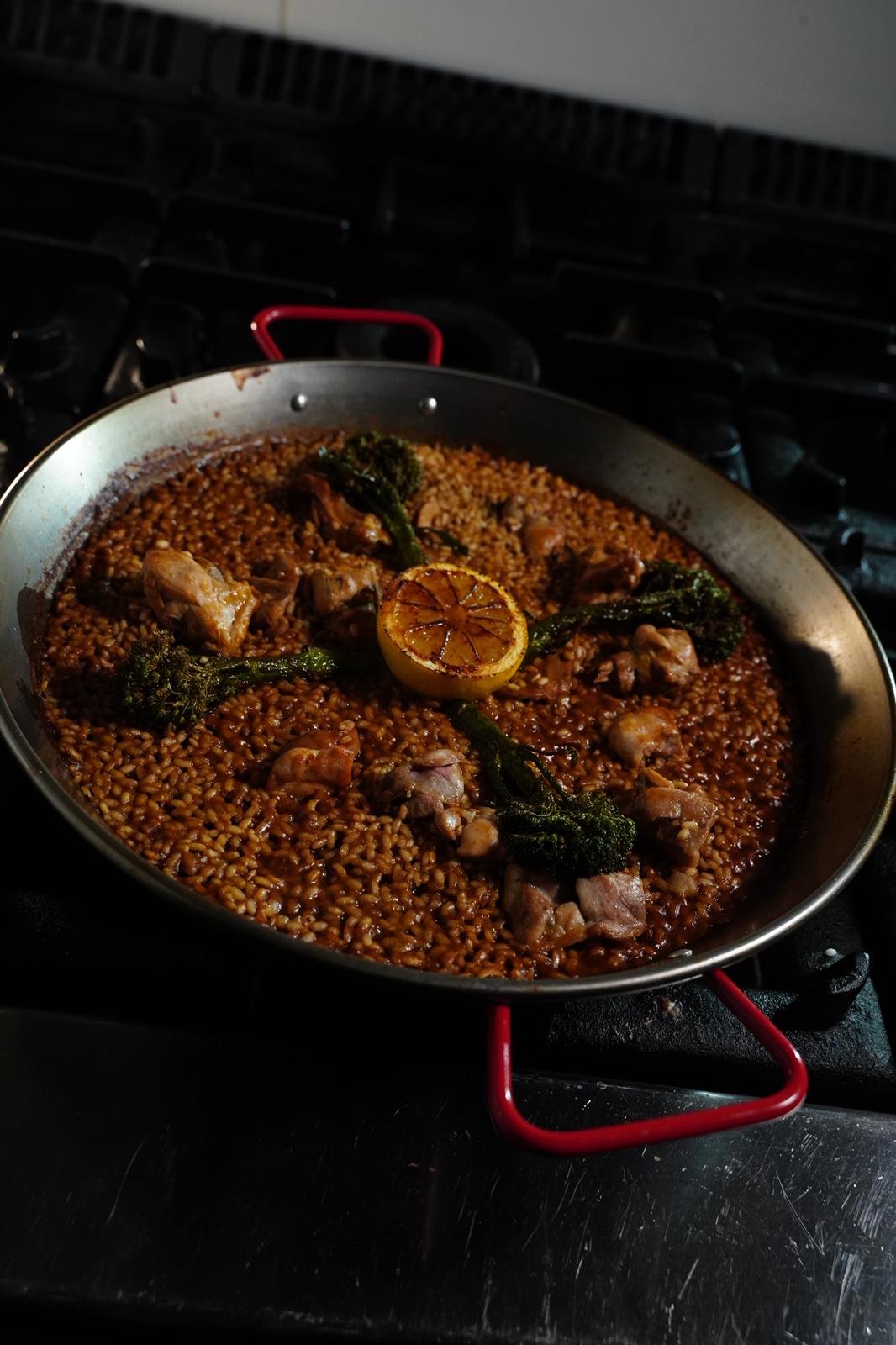
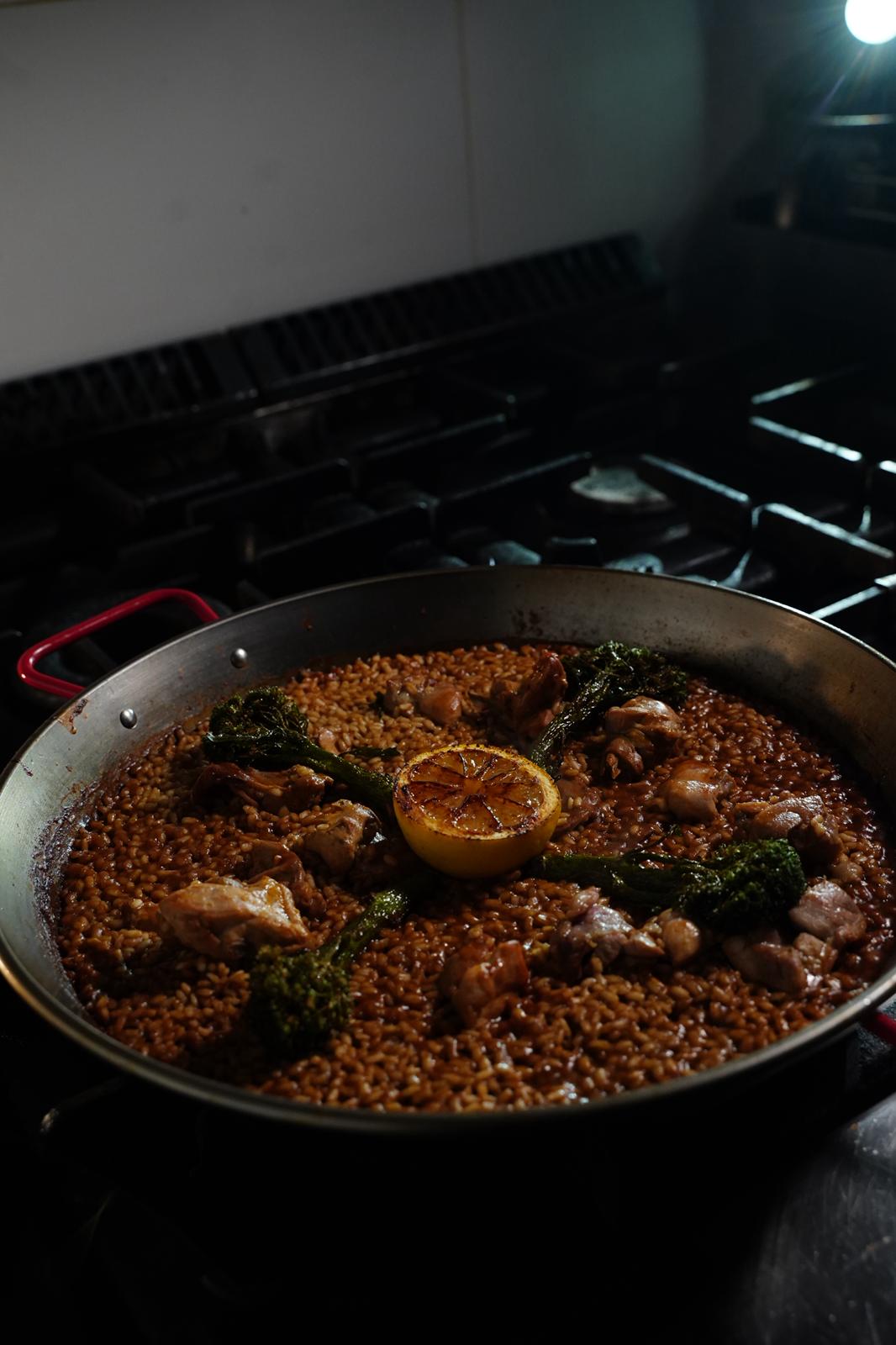
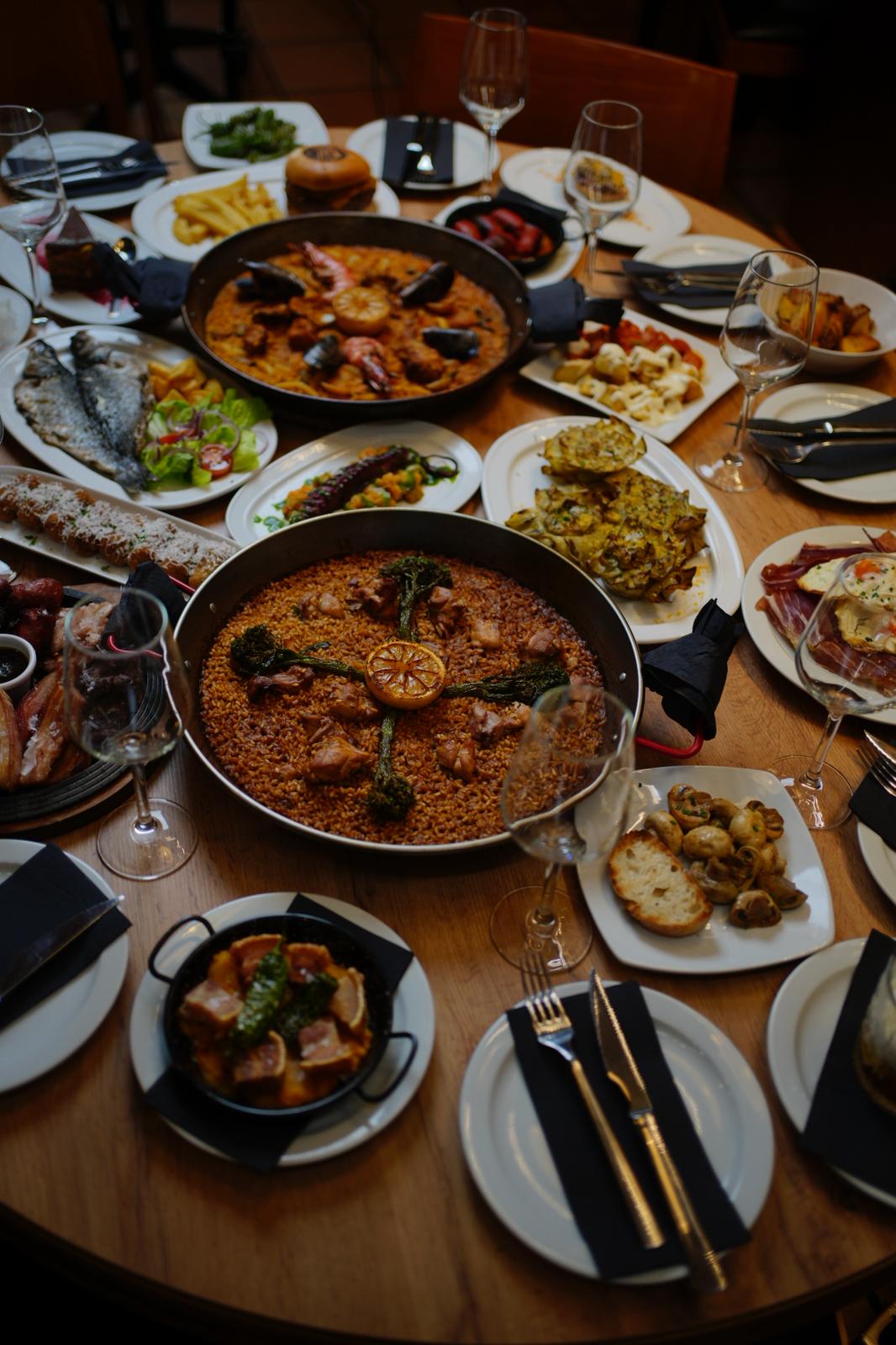
It is a dry rice, grain by grain, with that deep mahogany colour that only a well-reduced broth can give. Here, meat takes centre stage: juicy pieces of chicken and rabbit, golden over the coals, distributed across the red-handled steel paella pan. The finish has a signature of its own: a half-lemon charred on the plancha in the centre, and a few broccoli stems grilled and arranged crosswise, adding a green and slightly bitter note to cut through the richness of the rice. The kitchen respects each ingredient's timing so nothing overcooks. A generous sharing rice that revives the flavour of traditional paellas and lifts it a notch with the holm-oak nuance.
Ingredients and charcoal cooking
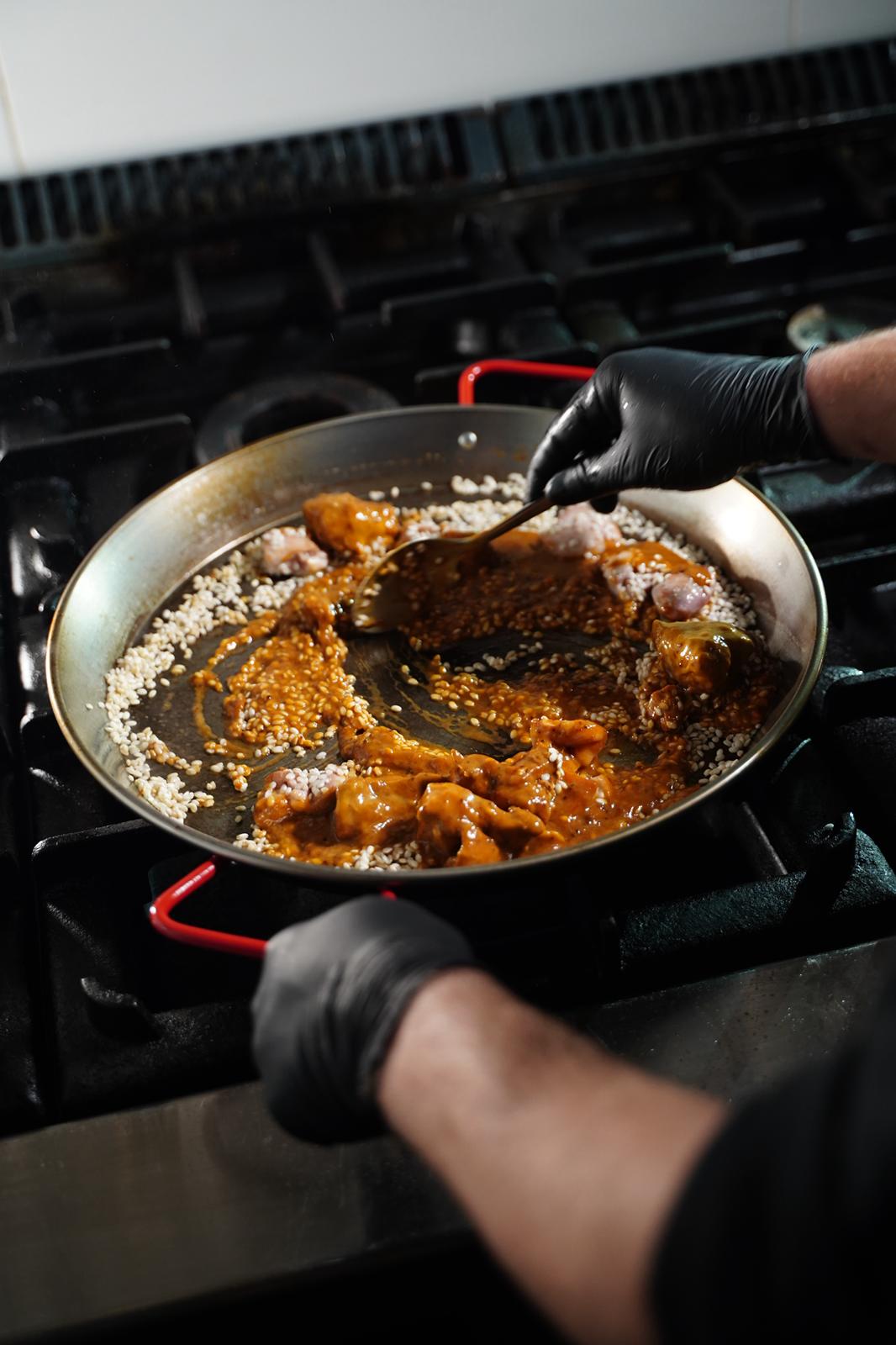
What sets this Valencian apart is not just the recipe, but the method. The holm-oak charcoal provides a live heat and a background aroma that the rice absorbs slowly. Everything starts with a thick, red paste that at Cavacarbon they work into the raw grain, toasting it dry before adding the broth. The chicken and rabbit are browned over the embers, and the rice goes in once the sofrito has stained it; that is where the recognisable mahogany tone comes from. A sequence easy to describe and hard to perfect, requiring skill and a steady eye on the fire.
The socarrat, the perfect finish
The socarrat is that thin, crispy layer that forms at the bottom of the paella pan when the rice approaches its limit. In Cavacarbon's Valencian they treat it as few details deserve, because it sums up the mastery of the fire: not raw, not burnt, but golden and just right. Achieving it over charcoal takes real skill, since holm-oak heat rises and falls and you need to know how to read it. For many diners, that toasted base is the acid test of a paella well done. In the tavern it is treated for what it is: the dish's signature.
The mixed paella with a touch of charcoal
The other great rice offering of the house is the mixed paella with a touch of charcoal, which brings together meat and seafood in a single paella pan. It is the most versatile option on the menu, designed for tables with varied tastes, where some lean towards the sea and others to the land. The "touch of charcoal" is not just a decorative name: it is the holm-oak fire, which gives the dish personality and sets it apart from any standard mixed paella. Balance of flavours, fresh produce, and that smoky background define the dish.
What's in it
It starts from the same dry mahogany-coloured rice, with golden chicken and rabbit, and adds seafood on top: large prawns and a crayfish or two that crown the dish, catching the eye before they reach the mouth. It shares the house's signature — the charred half-lemon in the centre and the grilled broccoli spread across the pan. The challenge lies in the balance: no flavour should overpower another, and the whole should come out perfectly rounded. Cavacarbon measures the timings carefully so the meat stays juicy and the seafood is just right, without overcooking. The broth captures all the nuances and the rice absorbs them grain by grain. A complete, satisfying paella that works equally well for a group lunch or a celebration.
The smoky nuance of the holm oak
What turns this mixed paella into something different is precisely its touch of charcoal. The holm-oak fire adds a layer of smoky flavour that pairs beautifully with the mixture of meat and seafood, and ties the whole dish together. That nuance doesn't smother anything — it accompanies, just as the rest of Cavacarbon's charcoal cooking does. The rice absorbs the aroma during cooking and carries it all the way to the table. It is the detail that reminds you, from the very first bite, that you are eating in a tavern that cooks over charcoal.
Portions and how to order
The paellas at Cavacarbon are made for sharing, with generous portions that invite you to sit without watching the clock. The normal approach is to order the rice for two or more and surround it with the rest of the grill's offering: grilled fish, vegetables, charcuterie and dishes that end up filling the table, with a wine list on hand. It is worth booking, especially at weekends, by calling 647 79 83 00 or using the website's booking form. Since the rice is cooked to order, it pays to mention when booking if the paella is going to be the centrepiece of the meal.
What is it like to eat paella at Cavacarbon?
Eating paella at Cavacarbon means enjoying a charcoal-cooked rice with the atmosphere of a La Latina tavern all around you. The experience combines charcoal-grill cooking, fresh produce, and the warm service that Cava Baja is known for. There is no endless rice menu — there is a clear proposition: two well-executed paellas and the rest of the house's grill dishes. That focus on what they do best says a lot about the tavern.
What makes it different
The difference lies in the holm-oak charcoal and in the approach. Where many stretch the menu to infinity, here they prefer to do fewer things and do them to perfection. The fire runs through the entire kitchen, from the aged meats to the two paellas, and that gives the meal coherence. The diner notices the care in the produce, in the rice's cooking point, and in that smoky background that doesn't appear in a paella thrown together any old way. Add to that the location, right in the middle of Cava Baja, which turns the meal into an excuse to explore one of Madrid's most characterful neighbourhoods.
Valencian or mixed: which to choose
Choosing between the Valencian and the mixed paella with a touch of charcoal depends on the day and the table. The Valencian is for those who want the classic rice, faithful to tradition, with meat and vegetables. The mixed suits better when there are varied tastes and a mix of meat and seafood in the same pan sounds appealing. Both share the same hallmark — the holm-oak charcoal — so either way you get that smoky nuance. If in doubt, mention it when you book or as soon as you sit down, and let the team advise you based on your group size.
Cava Baja, 8: the heart of La Latina
Cavacarbon's address is Cava Baja, 8, Centro district, Madrid, 28005. You are right in the middle of Cava Baja, La Latina's tavern street, a couple of minutes from Plaza Mayor and well served by the metro. It is a convenient location for those who live in the centre and for anyone looking for paella near the classic spots. The surroundings, buzzing at weekends, complement the house's offer and make the meal about more than just sitting down to eat.
Where to eat paella near you in Madrid?
When you search for where to eat paella near you in Madrid, proximity matters, but a guarantee of good rice matters more. Cavacarbon answers both in La Latina: a central, easy-to-reach spot, and a charcoal kitchen that looks after its two paellas. No need to crisscross the city comparing menus — just head to Cava Baja, 8 and book. For those passing through the centre or living nearby, it is the direct route to charcoal rice without complications.
Right on Cava Baja, in La Latina
Cavacarbon is right in Cava Baja, in La Latina, one of the best-placed eating enclaves in central Madrid. Its position makes it a natural stop for anyone exploring the tavern district and fancying a sit-down charcoal rice. The house blends the street's tradition with its own charcoal cooking, so the location is not just a map detail — it is part of the experience. Eating here means eating in the Madrid of old, with a rice that looks to Valencia and is cooked over holm oak.
Booking a table
Booking is the sensible move, even more so at weekends, when Cava Baja fills to the brim. You can easily do it by phone on 647 79 83 00 or through the website's booking form. When you reserve, mention how many are coming and, if the paella is going to be the main event, say so, because the rice is cooked to order. That foresight guarantees you a table and lets the kitchen organise the fire timing well. And you eat in peace, without queuing at the door.
How to get there and who it is for
Getting there is a breeze: Cava Baja, 8, a short walk from Sol and Plaza Mayor, with La Latina and Tirso de Molina metro stops nearby. The tavern appeals to those who love charcoal-grill cooking and are after a good charcoal rice in central Madrid — whether for a group lunch, a celebration, or a gastronomic stroll through La Latina. If wood-fired paella and the atmosphere of a Cava Baja tavern call to you, you now know where to eat paella near you in Madrid.