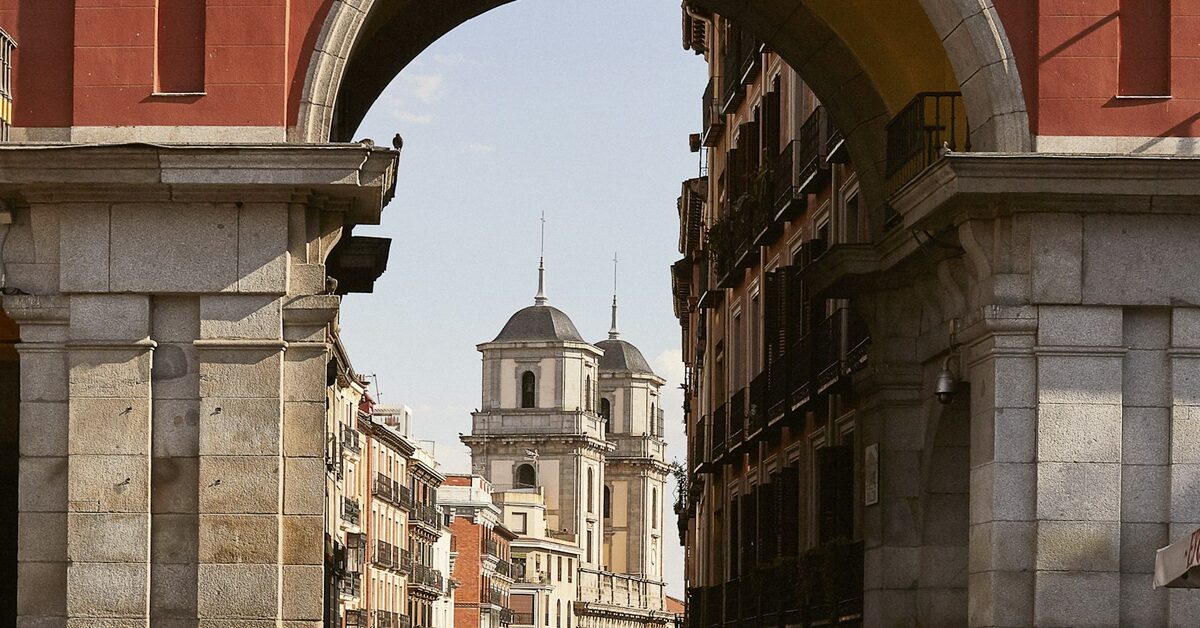
La Latina is not something you understand by reading a plaque. You understand it by walking through it. Its streets bend where there was once a wall, its squares keep the size they had when straw and barley were sold there, and in its taverns Sunday lunch still smells of stew. Few corners of central Madrid preserve so much of the old city: the morería, the works of Beatriz Galindo, the August street festivals. Tracing the history of this Madrid neighbourhood means understanding where the castizo spirit comes from — that word the city uses so often and explains so rarely.
What is the history of the La Latina neighbourhood in Madrid?
Medieval origins under the Catholic Monarchs and Isabella I of Castile
The neighbourhood begins when Madrid was still a small town, enclosed behind its walls. Under the reign of the Catholic Monarchs the area changed its face, and that change left it an identity that has lasted for centuries. What we now call La Latina belonged to Muslim Madrid, to the morería — a network of narrow streets and modest houses where cultures and creeds mingled. Isabella the Catholic directed some of her attention there. Thanks to her patronage, this piece of the centre gained increasing weight in the social and religious life of the capital. The queen's involvement in the area's urban growth proved decisive: on those foundations would later rise one of the most recognisable neighbourhoods in Habsburg Madrid.
The legacy of Beatriz Galindo and the name of the neighbourhood
The name comes from an exceptional woman: Beatriz Galindo, nicknamed "La Latina" for her mastery of Latin. She was the tutor of Isabella the Catholic and one of the most brilliant humanists of her time. Together with her husband, Francisco Ramírez, she founded the Hospital de La Latina in 1499, a charitable institution that ended up giving its name to the entire district. Beatriz Galindo — also known as "the queen's Latinist" — left her mark on the neighbourhood. Not only through the hospital. Also through other charitable works that eased the lives of the poorest people in old Madrid. That legacy makes La Latina proof of how far the role of educated women reached in the Spanish Renaissance, and explains why the name has held on for five centuries without shifting.
Evolution from the era of the morería to today
The neighbourhood has changed enormously. Truly enormously. From the medieval morería it passed, after the Christian reconquest and the expulsion of the Muslim population, to something quite different. The narrow streets of today are a direct inheritance from that layout: when houses were crammed inside the defensive walls, there was no room for wide avenues. Over the years, La Latina settled into its role as the quintessential traditional neighbourhood — popular and welcoming. Between the 18th and 19th centuries it became the centre of the most authentic Madrid, with its taverns, its markets and its festivals. One detail worth bearing in mind: part of its charm is down to the stubbornness of its residents, who resisted excessive modernisation. Thanks to that resistance the neighbourhood remains one of the most beloved — and most visited — corners of the capital.
What to see in the La Latina neighbourhood of Madrid?
Basílica de San Francisco el Grande and the Cathedral of La Almudena
The Basílica de San Francisco el Grande is one of the most imposing sights in La Latina and in all of Madrid. Its dome ranks among the largest in Christendom. Inside there are paintings by Goya and other masters, and a neoclassical architecture that takes your breath away the moment you enter. The temple, which took decades to build, sums up the religious grandeur of old Madrid and remains a reference point for anyone who looks upwards in those streets. The Cathedral of La Almudena sits, strictly speaking, at the edge of the neighbourhood. Its proximity draws it into the same itinerary anyway: anyone wanting to see the religious heritage of the centre passes by it almost without meaning to. Both buildings tell the same story from different stones — how heavily the Catholic faith weighed on the urban and social form of this Madrid neighbourhood.
Plaza de la Paja, Plaza de la Cebada and the narrow streets
The Plaza de la Paja is one of those places that stops you in your tracks. Small, medieval, with more history per square metre than half a city. This is where old Madrid's trade pulsed: there was an important food market here, and the square preserves that enclosed feel which contrasts with the life that pours into it when the terraces fill up. The Plaza de la Cebada plays in a different register. Broader and more commercial, it has maintained its function across the centuries and today is home to the Mercado de la Cebada, one of the capital's great food markets. Between the two squares run alleyways in which it is a pleasure to get lost — a labyrinth where every corner releases a piece of the neighbourhood's history. That medieval layout, intact in the middle of a modern city, is what many visitors come looking for without knowing it.
Museo de San Isidro and the church of San Andrés
The Museo de San Isidro is essential for anyone wanting to delve into the origins of Madrid. It occupies the site where, according to tradition, San Isidro Labrador — patron saint of the city — lived and performed his miracles. Its collections range from archaeological remains of medieval Madrid to documents and objects that tell how the town grew over time. A short walk away is the Iglesia de San Andrés, a church of great historical and artistic value, witness to key moments in Madrid's religious life. San Andrés holds chapels of remarkable beauty and stands as an example of sacred architecture in the city centre. Visited together, the museum and the church explain well the devotion to San Isidro that defines the traditional neighbourhood, and the weight that popular faith carried in shaping its character.
When are the festivals of San Isidro and La Paloma celebrated in the traditional neighbourhood?
The tradition of San Isidro in La Latina, Madrid
San Isidro is the great festival of the Madrid calendar, and every May La Latina moves to the centre of the stage. The devotion to the humble labourer who became patron saint of Madrid takes on its most popular, neighbourhood form here. For several days the narrow streets are adorned in traditional style, the taverns bring out their most typical dishes and residents don the costume of the chulapo and chulapa. The procession revolves around the saint's hermitage, which lies outside the neighbourhood, but its natural starting point is La Latina. Las Vistillas fills with Madrileños and visitors eager for the festival atmosphere, traditional music and the lively bustle that keeps the customs of old Madrid alive. Year after year, the festival reaffirms the traditional character of the neighbourhood and its role as guardian of the most authentic things in the capital.
The festivals of La Paloma: the most castizo celebration
The festivals of La Paloma, around 15 August, are the pinnacle of the castizo spirit. Devotion to the Virgen de la Paloma is embedded in the hearts of the residents, who spend weeks preparing for it with a contagious enthusiasm. And then the neighbourhood is transformed. Lanterns, garlands, impromptu street parties in every available corner, and the taverns of Cava Baja and Cava Alta packed to the rafters. The chulapos and chulapas parade in their traditional costumes through the centre of Madrid while processions in honour of the Virgin move through the streets amid singing and applause. The squares and terraces hold thousands of people. It is no small thing: these festivals are listed as Intangible Cultural Heritage of the city, and it shows on every corner.
Las Vistillas as the epicentre of Madrid's celebrations
Las Vistillas is one of the neighbourhood's most emblematic spots, especially during festivals. This natural viewpoint offers views over the Casa de Campo and the sierra, and during San Isidro or La Paloma it becomes a meeting point for half of Madrid. Street parties have always been held here, with orchestras playing chotis and paso dobles until the early hours. The traditional atmosphere of these nights is unlike any other: whole families watching the performances, stalls selling traditional food, a happy hubbub that goes on for hours. By virtue of its location, in the very heart of La Latina, Las Vistillas serves as the perfect watchtower of the traditions that have shaped the neighbourhood from one generation to the next. The most genuine Madrid — the real one — is still alive there.
Where to eat and enjoy the traditional atmosphere of the La Latina neighbourhood?
Cava Baja and Cava Alta: the streets of the traditional taverns
Cava Baja is the street. When someone talks about having tapas in La Latina in a traditional atmosphere, they nearly always end up here. This medieval thoroughfare follows the course of the old Christian wall and concentrates an astonishing number of century-old taverns, traditional kitchens and bars where the tapas culture is practised with real craft. Among its legendary premises stands out Lucio, which has been serving the most representative Madrileño cooking for decades to locals and illustrious diners alike. Cava Alta, parallel to its more famous sister, is not far behind: the same history embedded in its walls, comparable quality at table. Walking down these two streets on a Sunday lunchtime is entering something hard to describe — the smell of stews crossing paths with terrace conversations and the clink of glasses. If you are looking for a good restaurant on Cava Baja, you have plenty to choose from here.
Mercado de la Cebada and charming terraces
The Mercado de la Cebada is more than just a food market. In the Plaza de la Cebada, it has been since time immemorial the place where residents did their daily shopping. The current building is not the original, but the market keeps its function: fresh produce, good quality and that personal touch of traditional Madrid commerce. Around the square, and all through the neighbourhood, terraces multiply. Charming spots for a drink or an aperitif while the life of the traditional neighbourhood passes before you. In the warmer months they fill up and offer an incomparable balcony onto old Madrid's architecture: wrought-iron balconies, façades carrying centuries of history. What is curious is the mix. Those terraces marry tradition with the present and attract alike long-standing residents, recent arrivals and tourists. For a longer meal, many people look for somewhere to eat a good rice dish nearby without leaving the centre.
The most emblematic taverns in La Latina in Madrid
The neighbourhood holds some of the most storied taverns in all of Spain. Century-old establishments that have withstood the passage of time without losing their traditional spirit, their recipes and that atmosphere that only the years can give. Some still serve wine straight from the barrel. Some have their original tiles and period furniture. Each one tells its own story within the story of the neighbourhood. The menu in these houses ranges from callos a la madrileña to homemade croquettes, from cocido stew to huevos rotos — all washed down with local wine. On Sundays especially, after El Rastro flea market, the taverns of Cava Baja, Cava Alta and the surrounding streets come alive: groups of friends and families with a vermouth and tapas in hand, a social ritual repeated from one generation to the next. Anyone wanting the traditional atmosphere in its purest state will find it here, where Madrileño hospitality and fine food go hand in hand. In that same tradition moves the kitchen at Cavacarbon, with its charcoal-grilled rice dishes right on Cava Baja.
What historic monuments and green spaces are there to see in the La Latina neighbourhood?
Puerta de Moros and the vestiges of old Madrid
The Puerta de Moros is one of the most eloquent vestiges of the medieval wall that protected old Madrid. Today only fragments remain of what was one of the main gateways into the city from the morería, but they are enough to imagine how that Madrid defended itself. The name comes from its proximity to the old Muslim quarter, a constant reminder of the area's multicultural origins. Around it, the streets preserve the irregular layout of medieval town-planning, with houses adjusting to the slope of the terrain. There are more traces of that Madrid scattered around the neighbourhood: stretches of the Arab wall, archaeological remains emerging in some basement, old buildings telling the story of how the town evolved from the beginning. Walking here is travelling through time, with every stone ready to tell you something about the past of the capital.
Jardín del Príncipe de Anglona and Madrid Río
The Jardín del Príncipe de Anglona is a breathing space in the middle of La Latina's bustle. A historical garden of neoclassical style, designed in the 18th century, it is one of the few palatial gardens still preserved in the city centre. It offers an intimate, almost romantic space, with well-drawn parterres, ornamental fountains and vegetation that provides shade and coolness in summer. It is modest in size, true, but it serves as an example of how the aristocracy of old Madrid understood gardening. Nearby the register changes completely. The neighbourhood's proximity to Madrid Río has opened new leisure options for its residents. That major project to reclaim the banks of the Manzanares provides kilometres of green spaces, tree-lined walks and areas for sport and rest that complement the neighbourhood's historical heritage. History and quality of life coexisting without treading on each other — which is not always easy in a city.
Teatro La Latina and other cultural spaces in the Madrid neighbourhood
Teatro La Latina is an institution — within the neighbourhood and within the Madrid theatre scene. Its history stretches back decades and countless productions that have left their mark on Spanish theatre have been staged there. It has specialised in comedy and musical theatre, with a programme that draws in both local residents and theatregoers from the other side of the city. And as it sits right in the centre, surrounded by taverns and restaurants, the show combines with dinner in one evening stroll. The neighbourhood does not stop at the theatre. There are small concert halls, art galleries in carefully restored historic buildings, and squares such as the Plaza de los Carros that host open-air cultural events when the heat comes. All of this makes La Latina a well-rounded destination where history, traditional character, good food and contemporary culture interweave in an experience that tastes of authentic Madrid. Its closeness to the Plaza Mayor, to the rest of Habsburg Madrid and to arteries such as Calle Toledo and Puerta de Toledo places it in an unbeatable position for anyone wanting to explore the capital's heritage without giving up its social life.